Introduction: Why Hybrid Work Has Become a Cybersecurity Minefield
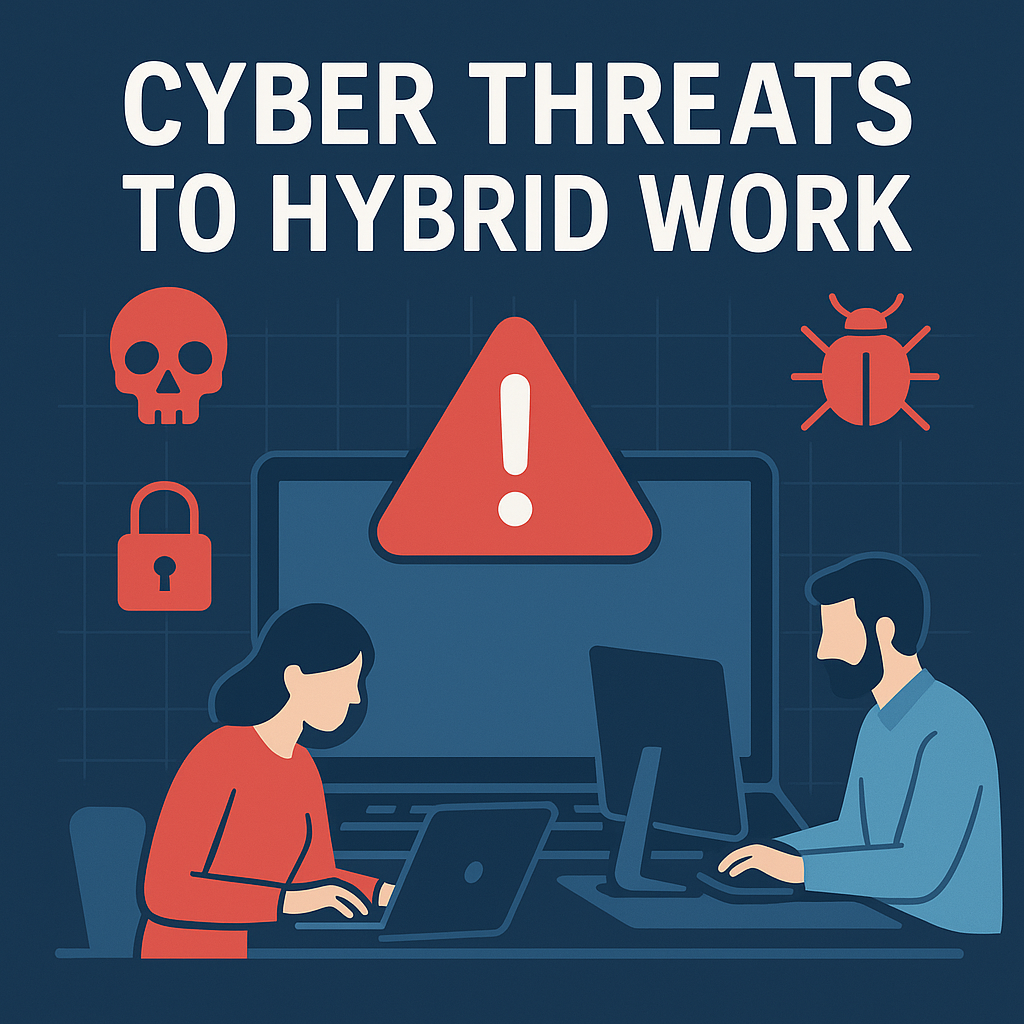
Hybrid work is now the default operating model for organizations worldwide—but with all its flexibility comes serious security risks. Employees toggle between home networks, office devices, public Wi-Fi, and cloud applications. This mix creates a complex, often vulnerable digital environment that cybercriminals actively exploit.
To strengthen your security posture, you must understand the 5 biggest cyber threats to hybrid work and how they impact your business. This guide breaks down each major threat, why it’s growing, and the essential steps your organization must take to prevent costly breaches.
1. Phishing Attacks: The Gateway to Most Hybrid Work Breaches
Phishing remains the number one cyber threat to hybrid work environments. With communication happening across email, chat apps, and collaboration tools, employees are bombarded with messages—making them easy targets for manipulation.
Why Phishing Is Worse in Hybrid Work
-
Employees rely heavily on digital communication instead of face-to-face verification.
-
Attackers use AI-generated emails that mimic real colleagues, managers, and vendors.
-
Remote workers are more likely to access email from personal devices or unsecure networks.
-
Sophisticated “multi-channel phishing”—using email + SMS + Slack/Teams—makes scams more convincing.
Common Phishing Variants Targeting Hybrid Teams
-
Business Email Compromise (BEC): Impersonation of executives or finance departments.
-
Invoice fraud: Fake vendor requests disguised as urgent payment reminders.
-
Credentials phishing: Fake login pages for Microsoft 365, Google Workspace, VPNs, etc.
-
QR code phishing (Quishing): Malicious QR codes embedded in emails.
How to Protect Your Organization
-
Enable multi-factor authentication (MFA) across all critical systems.
-
Use anti-phishing filters that block spoofed domains and suspicious messages.
-
Train employees with ongoing phishing simulations.
-
Encourage “verify before you click” culture.
Bottom line: Phishing is the easiest way attackers bypass your defenses—and hybrid work makes it easier than ever.
2. Ransomware: A Growing Financial and Operational Threat
Ransomware continues to dominate global cybercrime, costing businesses billions each year. Hybrid work environments increase the number of endpoints, accounts, and entry routes, giving attackers more opportunities to infiltrate systems.
How Ransomware Targets Hybrid Workforces
-
Remote workers use devices that lack updated security patches.
-
Cybercriminals exploit VPN exposures and Remote Desktop Protocol (RDP) weaknesses.
-
Attackers take advantage of unsecured home routers and IoT devices.
-
Cloud storage and collaboration platforms become high-value targets.
Once inside, attackers encrypt critical data and demand payment—often in cryptocurrency—before threatening to leak sensitive information.
Why Ransomware Is Increasing
-
Ransomware-as-a-service (RaaS) makes attacks cheap and accessible.
-
AI enables faster vulnerability scanning and exploitation.
-
Organizations often lack monitoring across distributed devices.
How to Reduce Ransomware Risk
-
Keep all systems patched and updated regularly.
-
Deploy endpoint detection and response (EDR) tools.
-
Ensure regular, offline, immutable backups of all critical data.
-
Implement least-privilege access controls.
-
Create and rehearse a ransomware incident response plan.
When it comes to hybrid work, ransomware is no longer a possibility—it’s an inevitability unless proactive measures are taken.
3. Cloud Security Gaps and Misconfigurations
Cloud platforms power modern hybrid work—but they also introduce significant risks when poorly configured.
Why Cloud Misconfigurations Are So Dangerous
-
A single misconfiguration can expose hundreds of gigabytes of sensitive data.
-
Employees frequently store data in multiple cloud apps, increasing attack surfaces.
-
Organizations lack visibility into “shadow IT”—unauthorized cloud services used by staff.
-
Attackers exploit weak API security or stolen cloud credentials.
Top Cloud Risks in Hybrid Work Models
-
Unrestricted cloud storage buckets (open to the public internet).
-
Overly permissive access roles, allowing lateral movement.
-
Weak identity and access management (IAM) policies.
-
Unencrypted data at rest or in transit.
-
Lack of cloud activity monitoring.
How to Strengthen Cloud Security
-
Use Zero Trust architecture for all cloud access.
-
Audit all cloud configurations regularly.
-
Enforce MFA and strong password policies for cloud platforms.
-
Monitor activity with cloud security posture management (CSPM) tools.
-
Limit employee access based on role and necessity.
Cloud misconfigurations remain one of the 5 biggest cyber threats to hybrid work because they are easy to miss—but extremely costly.
4. Insider Threats: Unintentional and Malicious
Insider threats have surged in hybrid workplaces because employees often operate unsupervised, with high autonomy and access to critical data.
These threats come in two forms:
Unintentional Insider Threats
Employees accidentally:
-
Send confidential files to the wrong recipient.
-
Use weak passwords or repeat passwords across platforms.
-
Store work files on personal devices.
-
Lose laptops, USBs, or mobile phones.
-
Install unauthorized applications.
Malicious Insider Threats
Workers intentionally:
-
Leak data to competitors.
-
Delete or steal company files after termination.
-
Install malware for financial gain.
-
Abuse privileged access for sabotage.
Why Hybrid Work Increases Insider Risks
-
Managers have limited visibility into employee behavior.
-
High job turnover means more departing employees with access.
-
Personal and work devices blend together.
-
Employees feel less monitored when working at home.
How to Mitigate Insider Threats
-
Use behavioral analytics to detect unusual account activity.
-
Enforce strict access controls and revoke permissions quickly after departures.
-
Use data loss prevention (DLP) tools.
-
Train workers on secure digital behavior.
-
Create clear cybersecurity policies for remote work.
Insider threats are underestimated, yet they remain among the biggest cyber threats to hybrid work due to their unpredictability.
5. Unsecured Devices and Endpoint Vulnerabilities
Hybrid workforces rely on a wide range of devices—laptops, tablets, mobile phones, home desktops, and sometimes personal equipment. Every device is a potential entry point for attackers.
Common Endpoint Weaknesses
-
Lack of encryption.
-
Outdated operating systems.
-
No antivirus or EDR installed.
-
Public Wi-Fi usage without VPN.
-
Device sharing with family members.
The Rise of Bring Your Own Device (BYOD) Risks
Employees often use personal laptops or smartphones for work tasks, especially in organizations without strict controls.
This leads to:
-
Company data stored on personal hardware.
-
Increased chance of data theft if devices are lost or stolen.
-
Exposure to malware from personal apps and downloads.
How to Reduce Device-Related Threats
-
Enforce device encryption company-wide.
-
Require VPN usage for any off-site connection.
-
Install endpoint security on all devices, including mobile.
-
Use mobile device management (MDM) or unified endpoint management (UEM) platforms.
-
Automatically block outdated or rooted devices from accessing corporate apps.
Endpoint security is the frontline defense against the 5 biggest cyber threats to hybrid work. Without strong controls, every device becomes a threat vector.
How Cybercriminals Exploit Hybrid Work Weaknesses
Understanding the methods attackers use helps organizations close security gaps more effectively.
Common Hybrid Attack Techniques
-
Credential stuffing: Using stolen passwords on remote access systems.
-
Remote desktop exploitation: Targeting weak or exposed RDP ports.
-
Wi-Fi spoofing: Creating fake public networks near remote workers.
-
Man-in-the-middle attacks: Intercepting data from insecure home networks.
-
Supply chain attacks: Targeting SaaS tools used by hybrid teams.
Hybrid environments blend personal technology with corporate systems—making them ideal targets for layered attacks.
The True Cost of Ignoring Hybrid Work Security
Failing to protect against the 5 biggest cyber threats to hybrid work leads to:
-
Financial losses from breaches and downtime.
-
Legal penalties for violating data privacy laws.
-
Reputational damage from leaked information.
-
Operational disruption and loss of customer trust.
-
Increased insurance premiums and regulatory oversight.
Organizations that ignore hybrid cybersecurity fundamentally jeopardize their long-term stability.
Best Practices to Secure Your Hybrid Workforce in 2025
Adopt Zero Trust Security
Assume no device, user, or network can be trusted without verification.
Implement Strong Identity and Access Management
Use MFA, single sign-on (SSO), and role-based access controls.
Continuous Monitoring
Track user activity, cloud logs, and endpoint behavior.
Employee Training and Awareness
Human error remains the weakest link in hybrid workplaces.
Comprehensive Data Protection
Encrypt data everywhere, enforce backup policies, and use DLP tools.
Conclusion: Stay Ahead of the 5 Biggest Cyber Threats to Hybrid Work
Hybrid work is here to stay—but so are the cyber threats that target it. By understanding the 5 biggest cyber threats to hybrid work—phishing, ransomware, cloud misconfigurations, insider threats, and unsecured endpoints—organizations can build smarter, more resilient cybersecurity strategies.
Protecting your distributed workforce requires a combination of technology, training, policy, and continuous monitoring. The companies that invest in strong hybrid security today will be the ones best prepared for the evolving threat landscape of tomorrow.